Publishing.com Pays $1.5 Million Over Its Passive Income Pitch, and Keeps Its Business
The Federal Trade Commission has ordered an online self-publishing coaching company and its two co-founders to pay $1,500,000 and accept twenty years of restrictions on how they advertise earnings, without banning them from the industry.
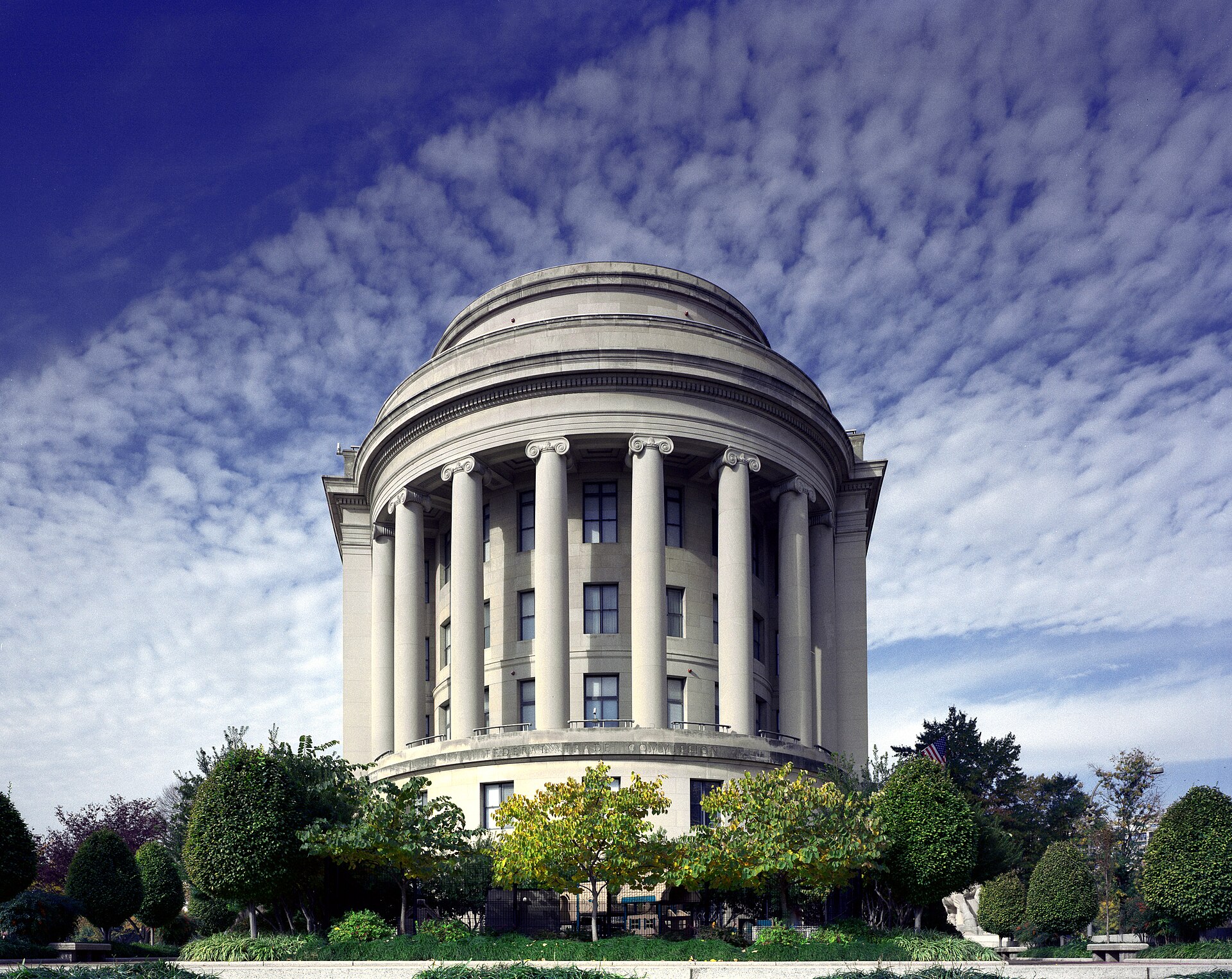
The Federal Trade Commission issued a final complaint and a Decision and Order against Publishing.com, LLC and its two co-founders, Christian Mikkelsen and Rasmus Mikkelsen, on 1 July 2026, in Docket No. C-4836. The respondents pay $1,500,000 and accept a 20-year order governing how they may make earnings claims, describe refunds and use testimonials. They neither admit nor deny the allegations, beyond the facts establishing jurisdiction. The Commission vote was 2-0 at both stages, by Chairman Andrew N. Ferguson and Commissioner Mark R. Meador.
The prices are in the complaint. The core course, which became AI Publishing Academy in April 2023, was typically sold at $1,995. An add-on called Publishing Accelerator, introduced in March 2022, generally sold for $9,800 and carried access to the company's own book-writing software. Christian Mikkelsen is chief executive and holds 50 percent of the company; Rasmus Mikkelsen is chief product officer and holds 25 percent.
The complaint alleges that since 2018 the company has sold programs purporting to let thousands of buyers earn a substantial income publishing ebooks and audiobooks online, and that the respondents spent millions of dollars on advertising, mostly video on Facebook and YouTube, funnelling viewers to a free training video behind an email capture.
What the pitch said
The strongest material in the file is the marketing language the Commission pleaded word for word. A May 2024 email from Christian Mikkelsen told readers they could, as the complaint quotes it, "copy the EXACT system hundreds of my students use to make $1k to $3k a month in passive income." A free training video from the same month told viewers they were "One upload away from, say, leaving your 9 to 5 job forever." Another email, offering a seven-day publishing challenge, said of the company's coaches: "Each of these coaches have used this same 7-day, 7-step process to publish their own books and now make over $10k/month in royalties."
Against that, the complaint states: "Contrary to Respondents' claims, many purchasers have made no profits at all after following Respondents' programs." It reproduces an anonymised consumer complaint from April 2025 describing losses "including over $49,000 in advertising expenses alone, which were never properly disclosed as necessary to achieve the results shown in the company's marketing materials."
The refund promise is the second count. Marketing quoted in the complaint called the course "backed by our 12 month simple refund guarantee (no questions asked)". The pleaded terms were not that. Past a three business day right of rescission, the complaint alleges that between October 2024 and March 2025 an AI Publishing Academy buyer had to "complete, produce, and publish a book at least 25,000 words in length", or an audiobook of at least two hours, to be considered for a refund. Two consumers, the Commission alleges, were told they would also have to hand over 5 percent of their book revenue. On that requirement the complaint says: "The purported requirement to share 5% of revenue prior to obtaining a refund has not been disclosed in any advertising material, nor does it appear in Respondents' Terms of Service."
The third count concerns endorsements. The complaint alleges the site touted thousands of reviews averaging 4.6 out of 5 stars on Trustpilot while free coaching was offered in exchange for a five-star review there, that more than 200 video testimonials ran without disclosing, until at least December 2024, that some featured employees, and that a contest offered a $10,000 grand prize for a testimonial.
"Consumers need accurate information about potential earnings to make informed decisions about investing their time, money, and efforts." — Christopher Mufarrige, Director of the FTC's Bureau of Consumer Protection
What the order does, and does not, do
The money is flat. Nothing is suspended, and there is no suspended-judgment provision in the order at all, so there is no larger figure the $1,500,000 stands in for. The sum is held in escrow by the respondents' counsel and payable within ten days of the effective date. It may go into a Commission-administered redress fund; if direct redress proves impracticable, anything unused goes to the United States Treasury.
There is no industry ban. The order does not bar the respondents from selling business opportunities, coaching or self-publishing programs. It conditions the selling. Earnings claims are permitted only where the claim is not misleading, the respondents hold written substantiation both for the figure and for it being typical of similarly situated consumers, and that substantiation is available on request to buyers, prospects and the Commission. The definition of an earnings claim is wide: it reaches references to quitting one's job or to financial freedom, purchases such as a home or a vehicle, and any representation, even hypothetical, of how much a consumer could earn.
Refund terms must now be disclosed clearly before a consumer is asked to pay, and a refund cannot be denied on a minimum-contract-length basis that was not disclosed before purchase. A disclosure delivered by hyperlink, pop-up or interstitial does not count as sitting near the claim it qualifies. Unexpected material connections between endorsers and the company must be disclosed, as must incentives conditioned on removing negative reviews or posting favourable ones. The Commission may pose as a consumer or supplier to check compliance without notice. The order runs 20 years from issuance, or 20 years from the most recent complaint alleging a violation of it, whichever is later.
Why the business opportunity rule was not charged
The Commission proceeded entirely under Section 5 of the FTC Act. No count was brought under its Business Opportunity Rule, 16 C.F.R. Part 437, and the reason sits in the rule's own definition. Under section 437.1(c), a business opportunity needs three things together: a solicitation to enter a new business, a required payment, and a representation that the seller will provide locations for equipment or vending devices, provide outlets, accounts or customers, including internet ones, or buy back what the purchaser makes.
Nothing in the pleaded facts says this company promised to provide locations, outlets, accounts or customers, or to buy back what its purchasers produced. Without that third limb the programs fail the test, and the rule's disclosure machinery never engages. That machinery is heavy. Section 437.2 requires the material disclosures in writing at least seven calendar days before any signing or payment, and section 437.4(a) requires any earnings claim to arrive with a statement headed "EARNINGS CLAIM STATEMENT REQUIRED BY LAW" in capital, bold type, giving the number and percentage of purchasers who reached the stated level.
The Commission announced a Notice of Proposed Rulemaking on 13 January 2025 that would extend the rule to business coaching and investment opportunities. Whether it was ever published, withdrawn or remains pending is not established from the documents read here, and the rule as it stands is unchanged. Ferguson, then a commissioner, dissented from that notice alongside Commissioner Melissa Holyoak. He is now Chairman, and voted for this order.
What is not known
How much consumers paid in total appears nowhere. The complaint gives unit prices and says thousands of consumers, but no revenue figure, no consumer count and no aggregate loss figure appears in the complaint, the order or the analysis to aid public comment, and the $1,500,000 is not described as disgorgement of any measured sum. How many buyers will get money back, and when, is not established either: the order says the payment may be deposited into a redress fund and that direct redress may prove impracticable, and no refund programme had been announced as of 23 September 2026.
This is an administrative proceeding, not a court case. There is no district court, no judge and no civil action number beyond the Commission's own docket. No consumer in the complaint is named. And every allegation of conduct here is the Commission's, which the respondents have neither admitted nor denied.
More from Entrepreneurs

The Fastest Carve-Outs Start the Work Before the Deal Has Actually Closed
Every additional month a business spends under a transitional service agreement erodes value on both sides, and the window to shorten it opens before…

SBA Moves to Redraw Who Counts as a Small Business, and Two of Its Own Numbers Disagree
A proposed rule would cut nearly 1,000 federal size standards down to 338 and add 114,541 firms to the count the government treats as small, and the…

Amway Agrees to Pay $225 Million Over How It Sold the Business Opportunity
Federal and Washington state regulators say recruits were pitched $40,000 a year while the median participant collected $139 in bonuses in 2023, and…