Barred, Settled, And Six Weeks To Hand Over The Firm
Eric Munson consented to a judgment and an industry bar without admitting the Securities and Exchange Commission's allegations, and the documents behind the case show how an investor can test a pre-IPO fund before wiring money.
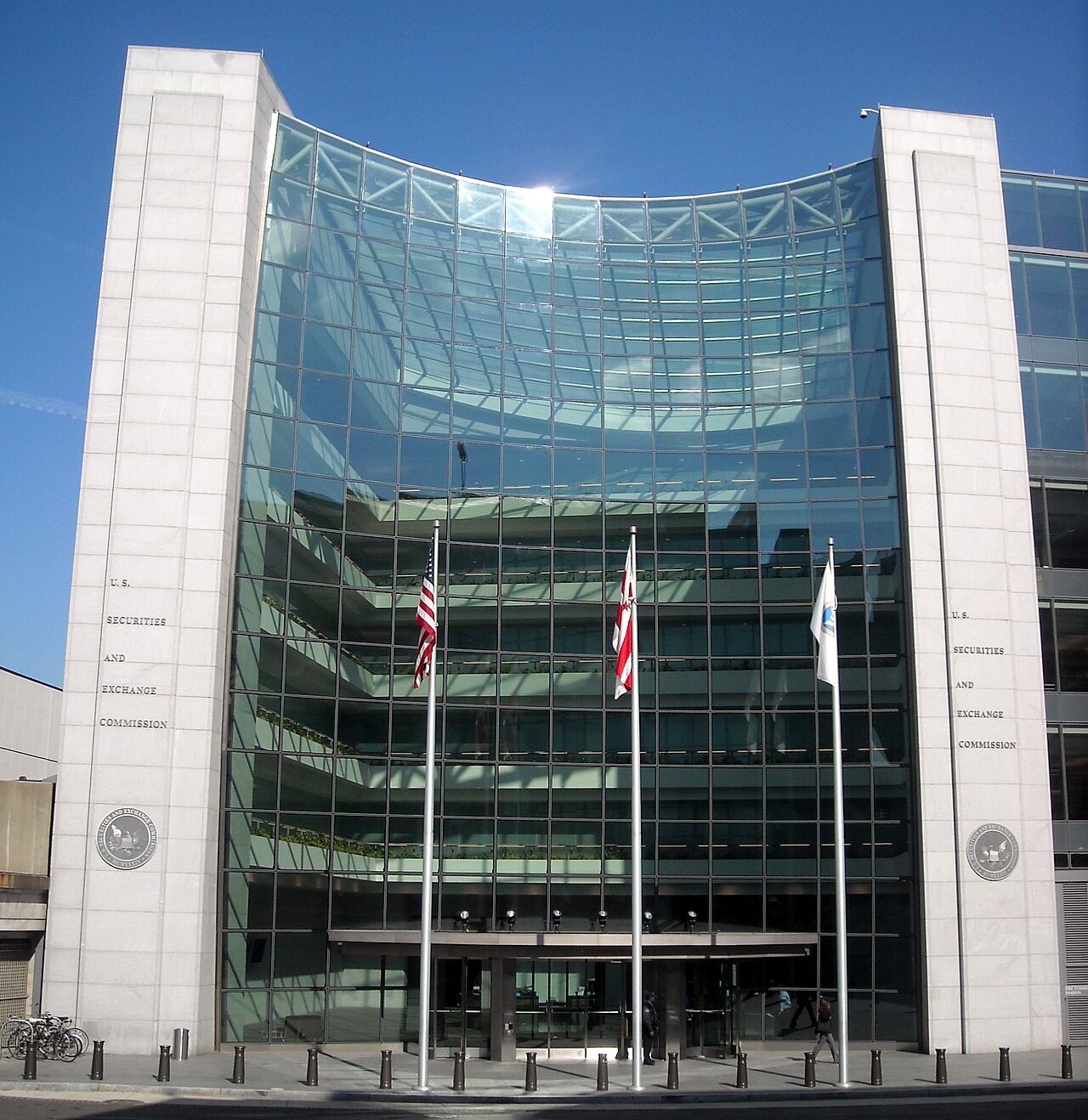
A final judgment was entered by consent against Eric L. Munson on August 11, 2026, one day after the Securities and Exchange Commission sued him, his firm Adit Ventures Management, LLC, and three affiliated general partners in the U.S. District Court for the Southern District of New York. Ten days later the Commission barred him from association with any investment adviser, broker, dealer, municipal advisor or transfer agent, among other registrants, with the right to apply for reentry after three years.
Nothing in the case was tried. The judgment permanently enjoins Munson from future violations of Securities Act Section 17(a), Exchange Act Rule 10b-5 and Advisers Act Sections 206(1) through 206(4) and Rule 206(4)-8. He agreed to it without admitting or denying the allegations, and the bar order records that he admitted only the Commission's jurisdiction over him and the fact that the judgment had been entered. Disgorgement, prejudgment interest and a civil penalty are all to be determined by the court on a later motion. No figure has been set.
What the Commission put in the complaint
The complaint, filed August 10, covers April 2019 through December 2024. It describes more than 60 private funds holding more than 1,000 investors, sold as a way to own shares in private companies ahead of an initial public offering. Munson, 65, is listed on the firm's Form ADVs as chief executive officer, chief investment officer and chief compliance officer at the same time, and owns over 75% of the management company.
The core allegation is a markup. A general partner would borrow from one client fund or use its own money, buy pre-IPO shares, then cause another client fund to buy those same shares at a higher price and keep the difference. The complaint counts more than 150 such transactions between April 2019 and November 2023 that lacked the written pre-completion disclosure and client consent that Advisers Act Section 206(3) requires.
It also alleges more than 50 loans from client funds to the general partners, moving tens of millions of dollars, and a $10 million line of credit at 17% annual interest secured on client fund assets. All of it is an allegation. None of it was adjudicated.
The clause that proves itself
The most useful document in the file is a fee clause the complaint quotes from a single-stock fund agreement, because an operator can apply it to a subscription package in front of them.
"In the event that the price per share at which the Partnership pays for Target Company Stock (the 'Original Purchase Price') shall be less than the Investor Price, the Partnership shall pay the General Partner . . . the difference between the Investor Price and the Original Purchase Price."
Read it as a test, not as boilerplate. The fee exists only when the fund's own purchase price is lower than the price the investor pays. If a subscription document lists an Original Purchase Price and an Investor Price and the two are the same, no acquisition fee is due. The document shows on its face that no fee is due, provided the Original Purchase Price it states is the real one, which is precisely what the Commission says it was not.
The Commission alleges the fee was charged anyway. One investor put $2 million into a vehicle in March 2021 where the subscription documents listed both the Investor Price and the Original Purchase Price Per Share as $38.00 per share of Noom, Inc. Equal numbers, no fee due. The general partner charged the fund over $50,000 anyway, the complaint says. Another investor signed a side agreement stating no acquisition fee would be charged, and the general partner collected more than $400,000 in acquisition fees on that investment. Diversified funds, the complaint says, allowed no acquisition fees at all.
The SpaceX example is the clearest arithmetic in the filing. The complaint alleges that in July 2021 a fund acquired an interest equivalent to about 13,100 SpaceX shares at $420 per share, and that the interest was then assigned to the general partner at cost, $420. By the end of that month, it says, the general partner sold the same interest to a new client fund at around $498.00 per share, a spread of $78 per share and about $1,020,000 the Commission says the general partner kept. The subscription agreement handed to investors in the buying fund stated the Original Purchase Price was $498.00 per share.
"By claiming that Original Purchase Price was the same as the Investor Price but deceptively omitting the truth that Defendants actually paid $420, Defendants concealed what they paid for these SpaceX shares and received payments from markups without disclosing those payments to their client Fund or investors."
That is the Commission's characterisation of the documents at paragraph 107 of the complaint, not a finding of a court.
The checks that cost nothing
The Investment Adviser Public Disclosure record for Adit Ventures Management, firm CRD 283262, shows SEC registration approved effective May 7, 2024, and exempt reporting adviser status withdrawn on March 29, 2024. The complaint alleges the firm never qualified for the venture capital exemption it claimed from April 2016, and that an unregistered adviser is not subject to regular examinations. The BrokerCheck record for Eric Lawrence Munson, individual CRD 1101264, now carries a regulatory disclosure dated August 21, 2026, resolution final, with the sanction recorded as a bar.
A third check needs stating carefully. A full-text search of the Commission's EDGAR system by this publication on September 21, 2026 returns 46 Form D filings naming Adit Ventures. A search of EDGAR the same day for Fika Holdings SPV III, the vehicle the Commission says did not hold 32,000 Klarna shares an investor was told it owned, returns zero results. So does a search for Astra Holdings SPV III, the fund the Commission says bought the SpaceX interest at $498.00. Sibling vehicles Fika Holdings SPV LP, Fika Holdings SPV II LP and Astra Holdings SPV LP all filed Form Ds. That is what the public record lacks, not a charged violation. An offering can rely on Section 4(a)(2) rather than Regulation D, and the Commission charged no Form D violation.
Six weeks to change hands
Several things remain unknown. No total investor loss figure is pleaded, and the counterparties are unnamed in the filing. Munson has not responded in any document reviewed here: no statement from him, from Adit Ventures Management or from counsel appears on the firm's website, in any Commission filing or in any court filing located.
The live item is a date. The bar order permits Munson to keep holding and controlling Adit Ventures Management, the three general partners and Adit Ventures IV, LLC only until November 4, 2026, and only to wind down his ownership and effect a change of control that ends his associated-person status. That is six weeks away. The firm still shows as an active SEC-registered adviser on the Commission's own database, on data compiled to August 18, 2026, so that record could not yet reflect a change of control made since. No Form ADV amendment reflecting one has been located.
More from Leadership

Only One in Five Women Knows She Is More Likely to Develop Alzheimer's Than a Man
Women account for roughly two thirds of diagnoses, and Maria Shriver wants the conversation about brain health to start decades before anybody…
The Chief Executive of a 350,000-Person Company Wants Digital Labour Taxed Like Human Labour
Ravi Kumar S runs Cognizant and argues that if a technology is deployed to eliminate work rather than amplify it, it should carry the same overhead a…

Fandom's New Chief Executive Has 300 Million Monthly Visitors Who Do Not Know Where They Are
Jay Sullivan took over a platform most of its own audience cannot name, and his fix is to build a simpler entrance without touching what is behind it.