Longevity Researchers Say the Field's Biggest Problem Is Evidence, Not Ambition
At a health leadership forum in New York, a Harvard geneticist, a neuroscientist and a telehealth founder agreed the science is moving fast and the marketing around it is moving faster.
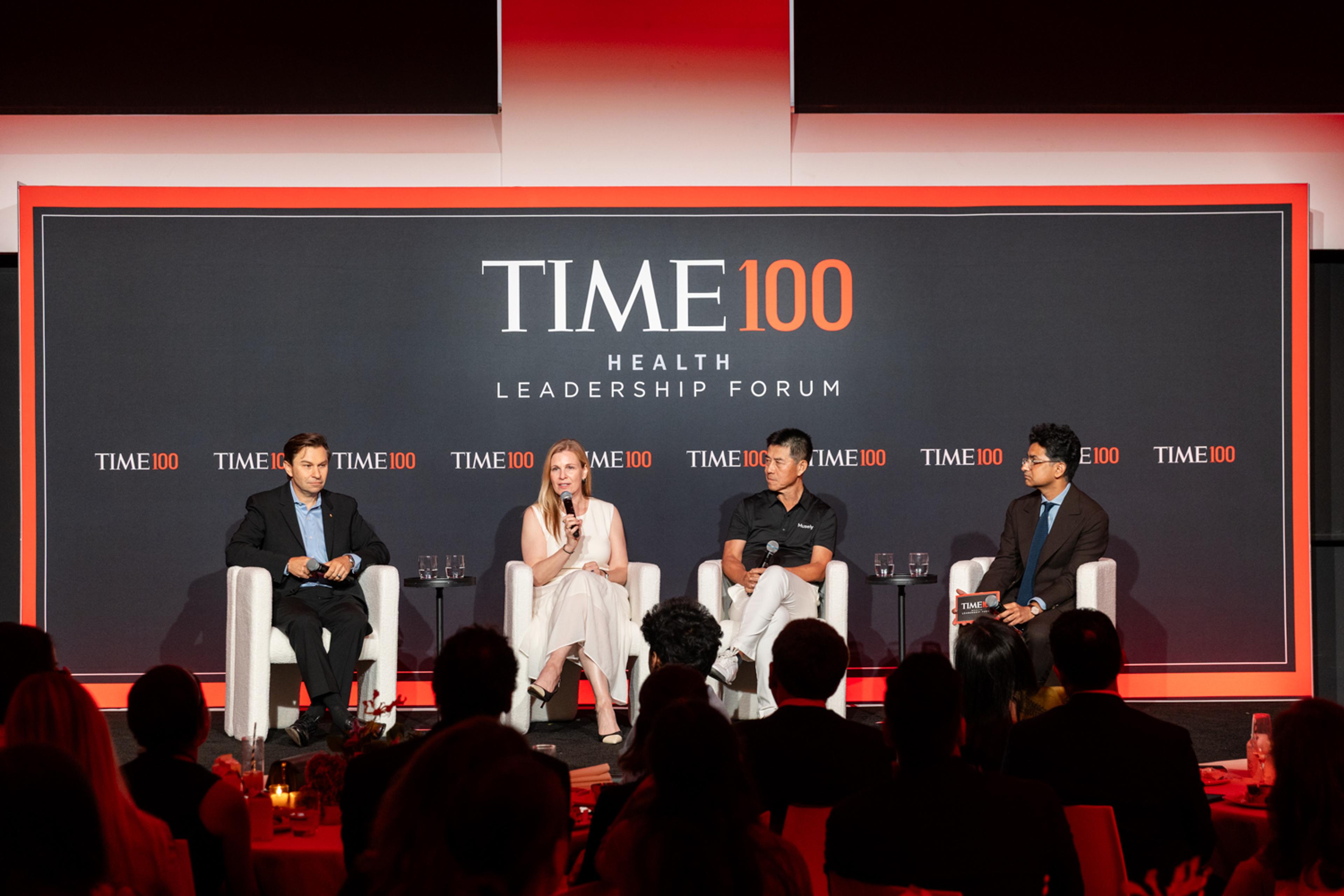
David Sinclair has said publicly that the first person who will live to the age of 150 is already alive today. Asked at a health leadership forum in New York on Sept. 10 what had led him to that claim, the Harvard Medical School professor answered with a point about compounding rather than biology.
"Children born today will live into the 22nd century, and just think about in the last five years what's happened to our world; it's barely recognizable when it comes to AI and even the healthcare world," Sinclair said. "So, in the 22nd century, children born today are going to have access to technologies that we literally cannot even imagine now."
He was joined on stage by Jennifer Garrison, a neuroscientist working in women's health biotechnology, and Jack Jia, the founder and chief executive of the telehealth platform Musely, which sponsored the session.
The data gap nobody has closed
Garrison's work centres on ovaries, and she made the case that this is not a women's issue narrowly construed. Understanding the differences between male and female bodies, she argued, "gives us levers with which to develop medicines" that benefit everyone.
"When we miss female physiology, we've essentially left out half of the picture," she said.
She offered an example. Female bodies tend to be better than male bodies at fighting off viruses. Researchers do not fully understand why. If they did, Garrison suggested, the medical community would be better equipped to treat patients of either sex according to what their biology actually requires.
Asked how far along the field is in understanding those differences, her answer was blunt. "We're pretty far behind, as it turns out," she said. "Everyone understands that there's a challenge here that we've got a data gap, that we've got this systemic bias about our research, that we're essentially, I think, generations behind."
She repeated the word deliberately. "It's not years. It's not decades. It's generations behind in terms of the data. So we're catching up, but it's going to take a while."
It's not years. It's not decades. It's generations behind in terms of the data
A credibility problem in the marketing
The panel turned to what the moderator described as an explosion in testing, as consumers order scans and panels on the promise of living longer and better. Garrison drew a line between tests with evidence behind them, which she called a good option, and the rest of the category.
"I think we can all acknowledge that there's a little bit of a credibility issue in the longevity space, and a lot of the products that are marketed are either poorly supported by evidence or outright pseudoscience," she said. "For women, the amount of information and marketing that comes at us these days is crazy. And part of the problem is that it's very hard as a consumer, as someone who's not a scientist or a doctor, to really make the call between, 'Is this real or not?'"
Sinclair, whose own public statements sit at the optimistic end of the field, raised a related concern from the other direction. Behaviours once regarded as fringe, he said, including injecting peptides and taking drugs not yet proven effective in humans, are becoming more common.
Where the commercial incentive points
Jia's route into the subject was personal. He built Musely out of a skincare tips platform after watching his wife struggle to find an effective treatment for melasma, a common pigmentation condition that is neither dangerous nor easily dismissed by the people who have it.
"This kind of wellness or cosmetics conditions are everyone's problem," he said. But "the entire healthcare system is not designed to solve that problem; it's designed to solve that real sick person who is dying."
That observation is the commercial thesis and the critique at once. A system organised around acute illness leaves a large space beneath it, and companies are filling that space faster than the evidence base is being built. Jia has since widened the platform to cover proactive health and longevity.
The panel's implicit conclusion was that the two problems are the same problem. The gap Garrison described in the research is precisely the gap the marketing is free to occupy.
More from Leadership
Only One in Five Women Knows She Is More Likely to Develop Alzheimer's Than a Man
Women account for roughly two thirds of diagnoses, and Maria Shriver wants the conversation about brain health to start decades before anybody…

The Chief Executive of a 350,000-Person Company Wants Digital Labour Taxed Like Human Labour
Ravi Kumar S runs Cognizant and argues that if a technology is deployed to eliminate work rather than amplify it, it should carry the same overhead a…

Fandom's New Chief Executive Has 300 Million Monthly Visitors Who Do Not Know Where They Are
Jay Sullivan took over a platform most of its own audience cannot name, and his fix is to build a simpler entrance without touching what is behind it.