The SEC Moves to Scrap the Rule That Puts Shareholder Questions on the Ballot
A federal rule that since 1942 has forced public companies to print qualifying shareholder proposals in their own proxy statements would be struck out entirely, leaving the question to state law and company bylaws.
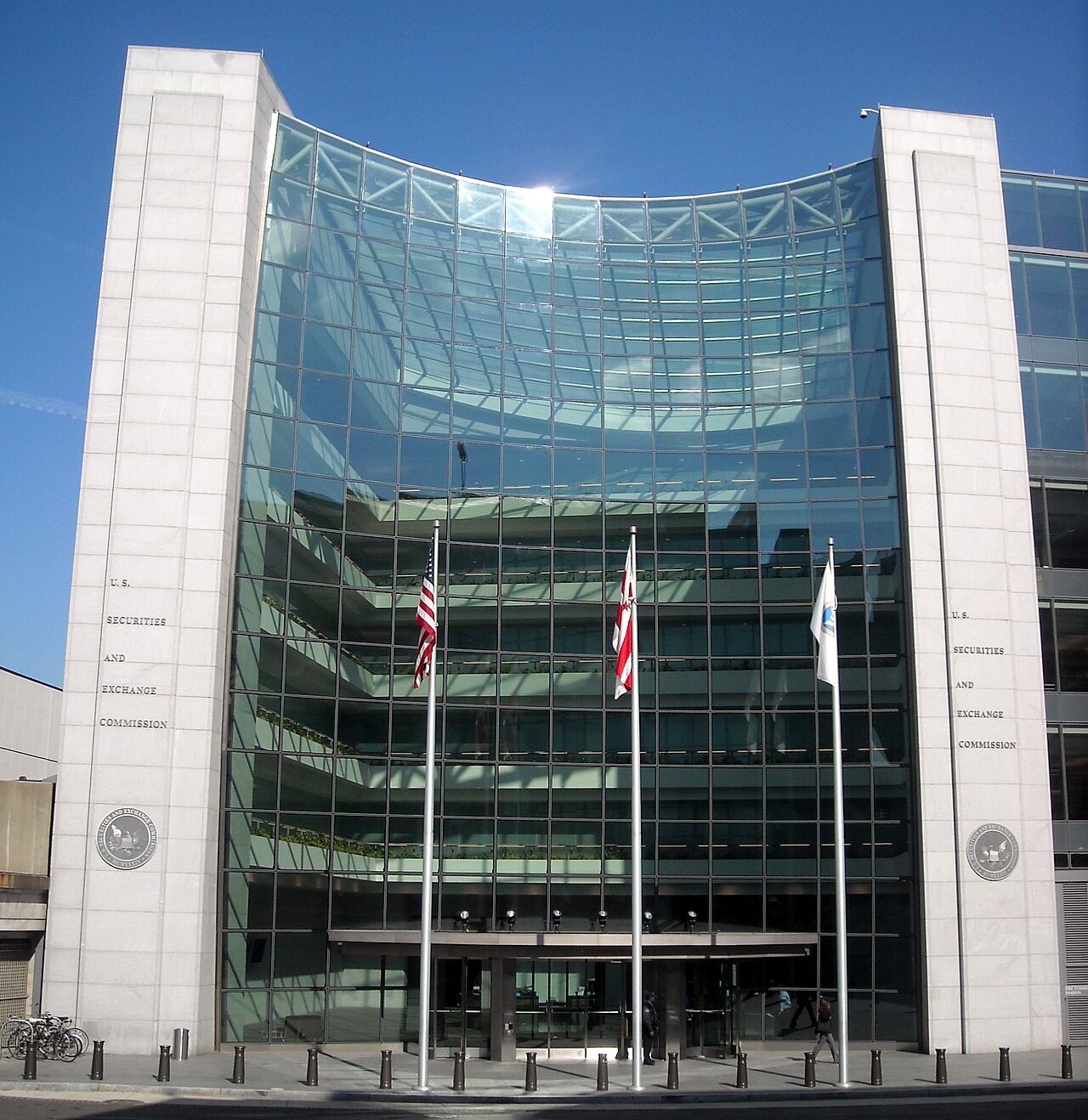
The Securities and Exchange Commission has proposed rescinding Rule 14a-8 in its entirety. That rule requires a public company to print a qualifying shareholder's proposal in its own proxy statement and put it on its own proxy card. If the rescission is adopted, the federal proxy rules would no longer require a company to carry any shareholder proposal at all. Whether one reaches the ballot would be settled by state law or, where state law permits, by the company's own charter and bylaws.
The proposing release is dated 16 September 2026 and was published in the Federal Register on 21 September 2026 at 91 FR 59904. It runs 64 pages and carries Release No. 34-106383, File No. S7-2026-32 and RIN 3235-AN47. The same release would also amend Rule 14a-4(c) to let a company vote proxies at its own discretion on proposals raised outside the Rule 14a-8 process, with a check box on the card letting a shareholder withhold that authority for their own shares. A companion proposal on proxy solicitation was published the same day under the same deadline, as a separate rulemaking.
Nothing has changed in law. This is a proposal. Comments close on 20 November 2026, and the Commission must weigh the comment file and vote again before anything is adopted.
Who signed it, and who was not there
The release is signed by Secretary Vanessa A. Countryman, "By the Commission." No numbered vote is published, either in the Federal Register notice or in the Commission's announcement, press release 2026-89. Three commissioners were sitting on 16 September 2026 — Chairman Paul Atkins, Commissioner Hester Peirce and Commissioner Mark Uyeda — and all three sitting commissioners backed it, each issuing a statement in support. Two seats on the five-member Commission are vacant, and the Commission had no Democratic member. No dissenting statement was issued.
The stated ground is jurisdictional. The Commission argues Rule 14a-8 exceeds its authority under section 14(a) of the Securities Exchange Act of 1934 by intruding on state corporate law, and that there are independent policy reasons to drop it.
"Because section 14(a) does not authorize the Commission to regulate the scope of matters presented to shareholders for a vote, the Commission lacks the power to override State law on this threshold question."
— SEC proposing release 34-106383, section II.A.1
Chairman Atkins, in his statement of 16 September 2026: "To be clear, the proposed rescission would not eliminate the concept of shareholder proposals and is not an attempt by the Commission to silence shareholders. Rather, it is a recognition that the Commission must act within its authority."
What the rule requires now
Under 17 CFR 240.14a-8, a shareholder must have continuously held at least $2,000 in market value for at least three years, or at least $15,000 for at least two years, or at least $25,000 for at least one year. No more than one proposal per person per shareholders' meeting is allowed, and the proposal plus its supporting statement may not exceed 500 words. For a regularly scheduled annual meeting it must reach the company's principal executive offices not less than 120 calendar days before the date of the prior year's proxy statement. A proposal on substantially the same subject can be excluded if the most recent vote in the preceding three calendar years came in under 5 percent of votes cast when voted once, under 15 percent when voted twice, or under 25 percent when voted three or more times.
The rule's subsection (i) now holds 13 substantive bases for excluding a proposal, and only two refer directly to state law.
The numbers the Commission put on it
For meetings held in 2025, 786 shareholder proposals were submitted under the rule: 64 percent were included and voted on, 22 percent were omitted and 14 percent were withdrawn. Average support for those voted on was 24 percent of votes cast, median 14 percent. About 7 percent of all submitted proposals passed, equal to 11 percent of those voted on.
Across meetings held from 2022 to 2025, companies filed 1,073 no-action requests, equal to 33 percent of all proposals submitted. Staff issued letters concurring with the company in 462 of them, 43 percent of the requests, and all but four of those proposals were excluded.
The Commission estimates each proposal carries a burden of 107 hours, 80.25 internal and 26.75 external, monetised at a blended $462 an hour. That is a saving of about $49,000 per proposal if the rule goes. In aggregate it puts the annual saving at about $29.7 million in reduced internal burden hours plus $9.9 million in external costs, about $39.6 million in total.
Set that headline figure beside the Commission's own caveat. The release says it "cannot provide a reliable aggregate estimate of total annual issuer compliance costs." The surveys it leans on are small and possibly self-selecting. The $39.6 million is a Paperwork Reduction Act figure, not a market estimate. The release also notes its proposal counts are a lower bound: the data may miss withdrawn proposals that never surfaced in a press release or a no-action request.
How this got here, and what it leaves open
Executive Order 14366, signed on 16 December 2025 and published at 90 FR 58503, directed the SEC Chairman to consider revising or rescinding rules relating to shareholder proposals, including Rule 14a-8. The staff had already stepped back from running the rule. The Division of Corporation Finance said on 17 November 2025 it would not respond to no-action requests for the 2025 to 2026 season except under Rule 14a-8(i)(1), and on 14 August 2026 that it would stop responding to them entirely, those ones included. Companies must still file their Rule 14a-8(j) notices.
Two rulemaking petitions asking the Commission to keep the rule arrived in July 2026: from the Shareholder Rights Group and others on 20 July, petition 4-918, and from Ceres and others on 23 July, petition 4-917. The release says it will weigh them alongside the comments.
For anyone running a company into the next proxy season, the practical questions stay open. The release sets no compliance or transition date, does not say what happens to proposals already submitted for meetings in 2027, and names no effective date for any final rule. Its premise is that states and company bylaws would fill the gap, yet it identifies no state statute on shareholder proposals as existing or pending. It concedes the handover will not be clean: the rule has governed this for more than 80 years, the transition "could extend for several years", and disputes moving to state courts may bring elevated litigation costs.
Commissioner Peirce, in her remarks of 16 September 2026: "The transition period may be bumpy, but shareholders and companies will work to strike the right balance in state laboratories of experimentation."
More from Leadership

Only One in Five Women Knows She Is More Likely to Develop Alzheimer's Than a Man
Women account for roughly two thirds of diagnoses, and Maria Shriver wants the conversation about brain health to start decades before anybody…

The Chief Executive of a 350,000-Person Company Wants Digital Labour Taxed Like Human Labour
Ravi Kumar S runs Cognizant and argues that if a technology is deployed to eliminate work rather than amplify it, it should carry the same overhead a…

Fandom's New Chief Executive Has 300 Million Monthly Visitors Who Do Not Know Where They Are
Jay Sullivan took over a platform most of its own audience cannot name, and his fix is to build a simpler entrance without touching what is behind it.