North Korea Has Widened Its Enrichment Capacity Since 2021, Nuclear Watchdog Finds
An International Atomic Energy Agency assessment describes the country's continuing nuclear work as a clear violation of United Nations Security Council resolutions and a cause for serious concern.
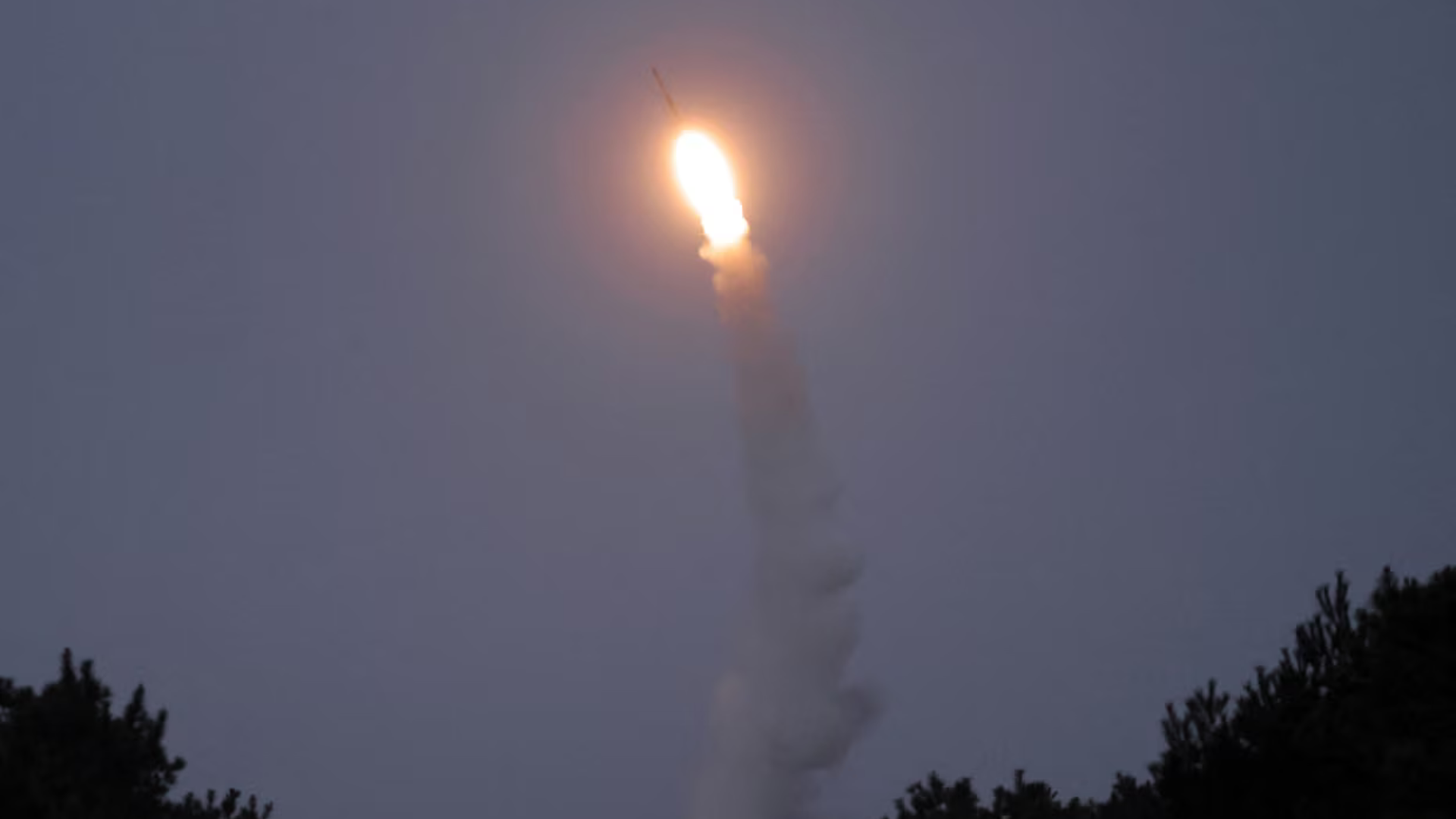
North Korea has expanded its ability to enrich uranium over the past five years, according to an assessment published in August by the International Atomic Energy Agency, which described the activity as "deeply troubling" and said it amounted to a clear violation of United Nations Security Council resolutions.
The finding is notable less for what it reveals than for how it was reached. Agency inspectors have not been inside the country since 2009. Everything in the report is therefore drawn from satellite observation and from open declarations made by Pyongyang itself, which makes the specificity of the conclusions more striking rather than less.
What the agency says it can see
The central judgment concerns capacity rather than stockpile. "Since 2021, an expansion in enrichment capacity has been observed, with extensions to existing enrichment facilities at the Yongbyon site and at Kangson, and the construction of an additional uranium enrichment facility at Yongbyon," the report states.
That expansion is mirrored further back in the fuel chain. The agency records "indications of expanded mining, milling and concentration activities at the Pyongsan Uranium Mine and the Pyongsan Uranium Concentrate Plant, and ongoing activity at the Wolbisan Uranium Mine."
Taken together, the two observations describe a programme being scaled at both ends at once, with more raw material moving through and more capacity to process it. That is a different picture from a maintained programme running at a steady state.
The country has not abandoned its existing nuclear programme in a complete, verifiable and irreversible manner
A programme declared irreversible
North Korea conducted nuclear tests in 2006, 2009, 2013, 2016 and 2017. Each round drew Security Council resolutions demanding that the country abandon all nuclear weapons and cease the programme entirely, and that it readmit agency inspectors so compliance could be verified.
None of that has happened. Contrary to the requirements of those resolutions, the report states, North Korea has not abandoned the programme "in a complete, verifiable and irreversible manner" or ceased all related activities.
The position has hardened into formal policy. In September 2025 the country declared itself a "nuclear weapons state" and said that status had "become irreversible." It also asserted that the agency had "no legal right" to interfere in the internal affairs of a nuclear weapons state, which is a rejection not of a particular inspection but of the inspection regime as a concept.
The delivery side
Warheads are only half of a capability. The Council on Foreign Relations, a research institution that tracks the programme, has noted that North Korea launched a record number of missiles in 2022 after two years of relative quiet, and that the pace carried into the following year.
The most consequential of those was the Hwasong-18, the country's first solid-fuel intercontinental ballistic missile. Solid fuel matters for a specific reason: a solid-fuel missile needs far less time to prepare for launch and is much easier to conceal before it flies. As the council put it, if successfully developed the system "would decrease the probability of success of a pre-emptive strike on North Korea's arsenal."
That is the quiet strategic shift buried in the technical detail. A liquid-fuelled arsenal can in principle be caught on the ground. A solid-fuelled one is far harder to find in time.
What the response has looked like
The counter-measures have been defensive and economic rather than diplomatic. The United States deployed the Terminal High Altitude Area Defense system to the Seongju region of South Korea, a hundred and fifty-five miles from the northern border, and has maintained economic sanctions throughout. In 2017 it placed North Korea back on its list of state sponsors of terrorism.
None of those steps has slowed the programme, and the agency's report does not suggest otherwise. Its value is narrower and, in the circumstances, more useful: it establishes on the record what can be observed from outside, so that any future negotiation begins from an agreed description of the facts rather than a contested one.
More from News

A Netflix Caption, an Anniversary, and a Row That Was Always Going to Happen
A six-word promotional post about a television drama landed on the first anniversary of Charlie Kirk's killing, and the streamer now says any…

Raz-B and Mona Li Thornton Have Announced the Death of Their Three-Month-Old Son
The couple confirmed the loss of Astro Monte Thornton through a spokesperson on Thursday, and have asked for privacy.

Fifteen Celebrities Are Going Into the Malaysian Jungle, and Two of Them Already Do Not Get Along
Special Forces returns on September 24 with no votes and no eliminations, which leaves only the terrain and the other recruits.