Russia Has Shifted From Ukraine's Power Grid to the Warehouses That Feed Its Cities
Logistics hubs serving every major supermarket chain have been hit, and the minister responsible says the targeting itself shows the campaign has changed.
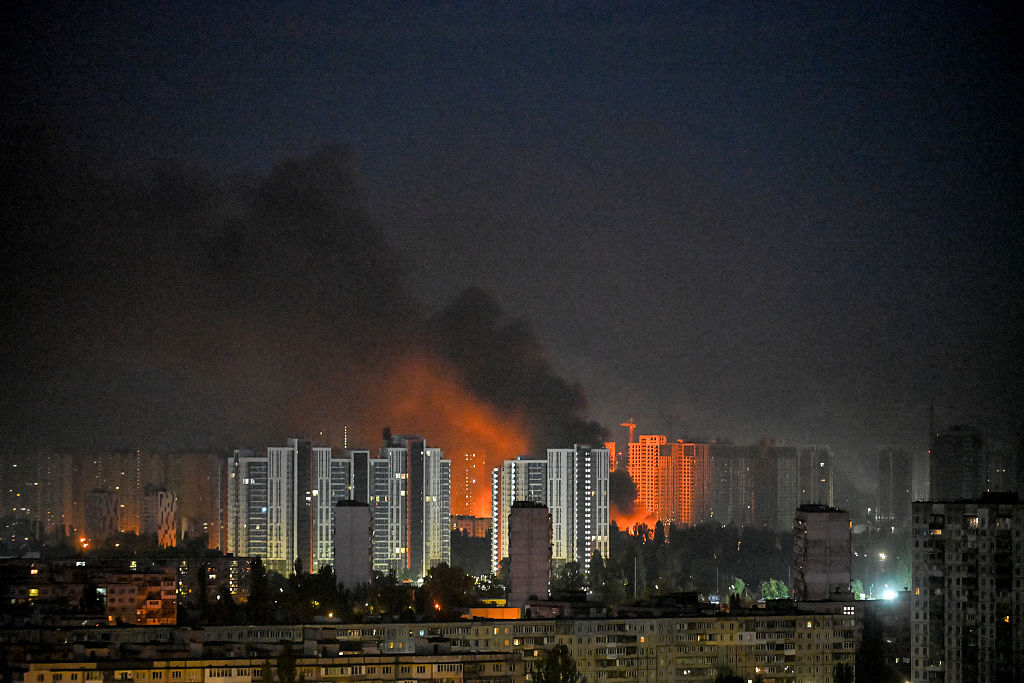
Shelves in Kyiv supermarkets are partially empty. The cause is not a shortage of food.
A new wave of Russian strikes has damaged or destroyed the warehouses and distribution centres that move goods from producers and importers into stores. Logistics hubs used by all of Ukraine's major supermarket chains, including Novus, ATB, Silpo and Fora, have been destroyed or significantly damaged.
Ukraine is not running out of food. It is losing the ability to get food from where it is to where people buy it.
A change in the pattern
Taras Vysotsky, Ukraine's agrarian policy and food minister, argues the target list marks an evolution rather than another round of destruction.
In 2022, Russian attacks concentrated on agricultural infrastructure tied to exports, which hit Ukraine's revenue and global grain supply. Later the energy system became the priority, producing rolling blackouts and a continuous cycle of repair to generation and distribution facilities.
The current strikes are hitting the domestic logistics system that allows cities to function at all.
"The enemy is purposefully trying to destroy the logistics that provide Ukrainian cities with food," Vysotsky said.
About four million euros of inventory destroyed in a single strike, and the third such loss since the invasion
What it costs
Vysotsky estimates that the damage to warehouse infrastructure could push food prices up by around 2.5 per cent. Businesses think the eventual figure will be higher, because the real expense is not the lost stock. It is redesigning supply chains around the expectation of further attacks.
Dmytro Krymskiy, co-founder of Bureau of Wine, which operates several retail businesses including Goodwine, had a warehouse near Kyiv struck on September 1. Roughly four million euros of inventory was destroyed.
It was the company's third major warehouse loss since the full-scale invasion. A strike in 2022 destroyed 15 million euros of supplies. Another in July cost about 1.5 million.
Rebuilding the same way no longer works
For a business in that position, replacing what was lost in the form it existed is no longer rational.
Krymskiy's company is weighing three options: splitting inventory across several smaller warehouses, moving some storage to Poland, or putting stock underground. Each reduces the risk of losing everything in one strike, and each is more expensive to operate than a single large facility.
He estimates prices across his businesses could eventually rise by about 5 per cent.
That is the mechanism by which this reaches civilians. Not empty shelves, which are temporary, but a permanently costlier distribution system that everybody pays for at the till.
It is not only groceries
The same campaign has hit e-commerce logistics hubs and medical supply facilities.
One of the World Health Organization's principal warehouses for humanitarian aid outside Kyiv was struck. The pharmaceutical company Biokon said an attack on a warehouse destroyed three months of medicines and forced it to suspend operations.
Three months of a country's medicine supply, held in one building, is the same vulnerability the supermarkets have just discovered, with considerably higher stakes.
Why warehouses are an efficient target
There is a grim logic to the shift that is worth stating, because it explains why this is likely to continue.
A power station is heavily defended, expensive to hit and repaired by a state with international support. A distribution warehouse is a large, undefended shed on the edge of a city, owned by a private company, containing weeks of supply for millions of people.
The return on a single missile is therefore far higher against logistics than against generation, and the cost of the response falls on businesses rather than on the government, which has no budget line for rebuilding somebody else's warehouse.
The immediate context
All of this is happening during another intense period of attacks on the capital.
A temporary truce connected to the safe passage of American negotiators ended on Monday night. Renewed drone and ballistic missile strikes on Kyiv followed, killing two people.
More from News

A Netflix Caption, an Anniversary, and a Row That Was Always Going to Happen
A six-word promotional post about a television drama landed on the first anniversary of Charlie Kirk's killing, and the streamer now says any…

Raz-B and Mona Li Thornton Have Announced the Death of Their Three-Month-Old Son
The couple confirmed the loss of Astro Monte Thornton through a spokesperson on Thursday, and have asked for privacy.

Fifteen Celebrities Are Going Into the Malaysian Jungle, and Two of Them Already Do Not Get Along
Special Forces returns on September 24 with no votes and no eliminations, which leaves only the terrain and the other recruits.