FleetCor agrees to pay $100 million over fuel-card fees its customers could not find on an invoice
The order is not final and the Federal Trade Commission has not said how the money reaches the tens of thousands of small businesses it says were overcharged.
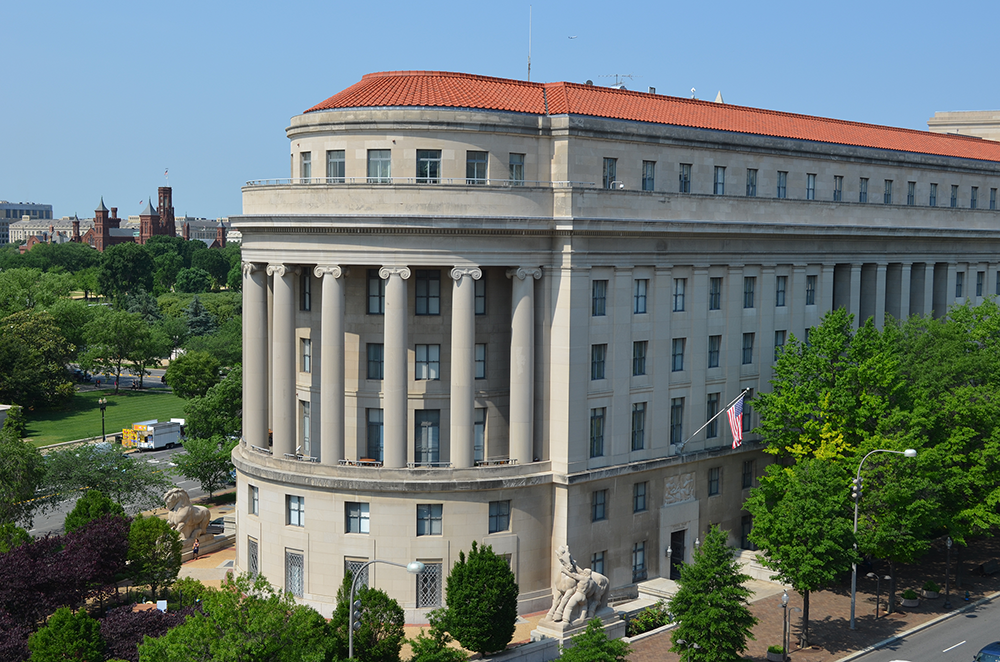
On 17 September 2026 the Federal Trade Commission announced that Corpay, Inc., the Atlanta payments company that traded as FleetCor Technologies, Inc. until 2024, and its chief executive Ronald Clarke had signed an agreement containing a consent order to pay the Commission $100,000,000. The Decision and Order calls it monetary relief, to be used as redress for business customers of the company's fuel cards. Payment is due within 8 days of the order's effective date. Signing is expressly not an admission that the law was violated.
The courts got there first. The U.S. District Court for the Northern District of Georgia granted the FTC summary judgment on liability against the company and Clarke on 9 August 2022 and entered a permanent injunction on 8 June 2023. The Eleventh Circuit affirmed liability against the company on all five counts on 6 January 2026, affirmed Clarke's liability on four of the five, and vacated the injunction as to him. What was left was money, and this order is the money.
The fees, line by line
The itemised numbers come from the FTC's administrative complaint, filed on 11 August 2021. They are allegations about specific fee lines, and they are the part of this case an operator should read.
- At least $108 million charged in High Credit Risk Account Fees, a bundle containing a High Risk Fee and a Level 2 Pricing Fee, charged without notice
- At least $1.7 million of those high-risk fees charged to customers solely because they operate in the trucking industry, which is the industry the cards are chiefly marketed to
- At least $40 million charged in Minimum Program Administration Fees
- Tens of thousands of customers hit with an administration fee in a single year, totalling over $1.68 million in that year alone
- At least tens of millions of dollars charged without consent for programmes the company called FleetDash, FleetAdvance and Clean Advantage, at $9.95 to $29.97 a month, $50 a quarter, or 5 cents a gallon
- A convenience transaction fee of $2.00 or more per fill at retailers the company classed as a non-preferred Convenience Network, naming Pilot, Texaco, Chevron and Loves
The complaint alleges the trucking-industry high-risk fee also landed on accounts miscategorised as trucking when they were not. One customer wrote in, as the complaint quotes it: "We are an Investigative Service and have absolutely NO association to a Trucking…"
What the operator could not see
The complaint alleges that fees often began only after several billing cycles had passed, which made them hard to spot against normal month-to-month variation. It alleges no billing invoice specifying fees was provided at all. Some fees, not all, appeared in a separate report the customer had to go and look at, where many were obscured among other information or not listed.
It also alleges that when a customer found a fee, called and got it waived, the company often replaced it with a different one, and that payments were not posted when received, producing late fees on payments made on time and then high credit risk fees because the account now looked delinquent.
Marketing frequently promised 5 to 10 cents per gallon in savings. An analysis the complaint says Clarke requested after negative press showed customers on average saved a fraction of a cent per gallon. The complaint alleges the fees charged exceeded whatever savings the cards did produce.
"FleetCor deceived its small business customers by promising fuel savings that never materialized, while unfairly charging them hidden and unauthorized fees. In addition to the relief the FTC has obtained in federal court, this order will help return money to the customers the company took advantage of." — Christopher Mufarrige, Director of the FTC's Bureau of Consumer Protection, in the Commission's press release
The checklist inside the injunction
The permanent injunction entered on 8 June 2023, and affirmed against the company on appeal, is a statement audit any operator can run against any fuel card, not only this one.
The order requires one billing statement per cycle, with the total fee amount due and an itemised list of all fees and charges on the first page. It requires at least one billing cycle of advance notice before any fee is charged for the first time, explaining why, how much and how it will appear on the bill, with late fees the only exception. Every fee must be disclosed before sign-up, with a description, the specific amount, whether it recurs and how often, and when it is charged.
It bars billing any charge without express informed consent, and defines that narrowly. Continuing to use the product is not consent. Nor is a reserved right to change the amount or terms. One expression of assent cannot cover more than one charge, and assent collected after the customer has already been charged does not count. Material terms may not be hidden behind a hyperlink or a tooltip.
Electronic and online payments must credit as of the date the customer submits them, no late fee may be assessed if payment is made before 11:59pm ET on the due date, and due dates may only fall on days the company actually processes payments. Savings claims require clear disclosure of material restrictions and competent and reliable evidence substantiating the figure, including any claim framed as up to a number.
What is still open
The order is not final. It goes out for 30 days of public comment after publication in the Federal Register, that notice had not published as of this writing, and only then does the Commission decide whether to finalise it. The vote to accept the agreement was 1-0-1, with Chairman Andrew N. Ferguson recused.
The FTC has not said how the $100 million will be distributed, how many customers will get money, how much any customer will get, or when. The order says only that the money may go into a Commission-administered redress fund, that leftovers may be applied to other relief related to the alleged practices, and that anything unused goes to the U.S. Treasury. The agency has also published no figure for total consumer harm. Hundreds of millions of dollars is its own phrasing, in 2019 and again in 2026. The itemised fee lines do not add up to a published total.
The company's own account of the matter is in its Form 10-Q for the quarter ended 30 June 2026, which records that it reached terms with FTC staff on 1 July 2026: "The proposed consent order is subject to the customary approvals of the FTC Commissioners and the District Court. The Company has currently recorded a $100 million charge based on the terms of the proposed consent order."
Corpay booked that charge in the same quarter, tagged in its own filing to the FTC matter. The prior-year figure was zero.
More from Business

Nvidia Is Buying Hugging Face for 12.93 Billion Dollars and Promising Not to Change It
The company that sells the hardware is acquiring the platform where developers choose what to run, and the whole deal rests on a pledge of neutrality.
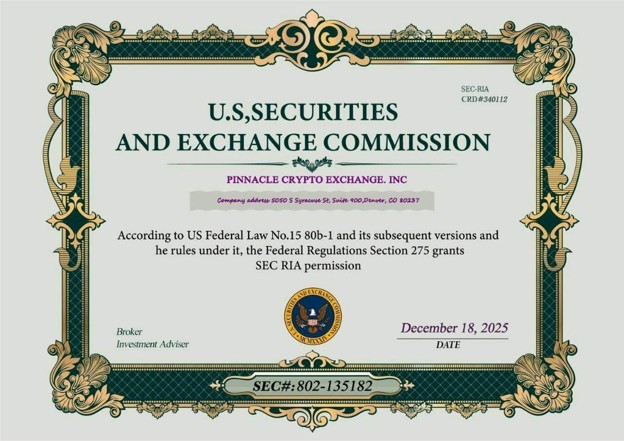
Thirty-eight companies filed a form with the SEC, then sold the filing as proof the SEC had approved them
The Securities and Exchange Commission says the paperwork it never reviews became the evidence of legitimacy, and it has now spelled out in court…
The SEC says Tricolor pledged the same car loans twice, and an analyst caught what the audits missed
Court filings in the collapse of Tricolor Holdings describe a funding machine in which the same subprime auto loans were pledged to more than one…